About
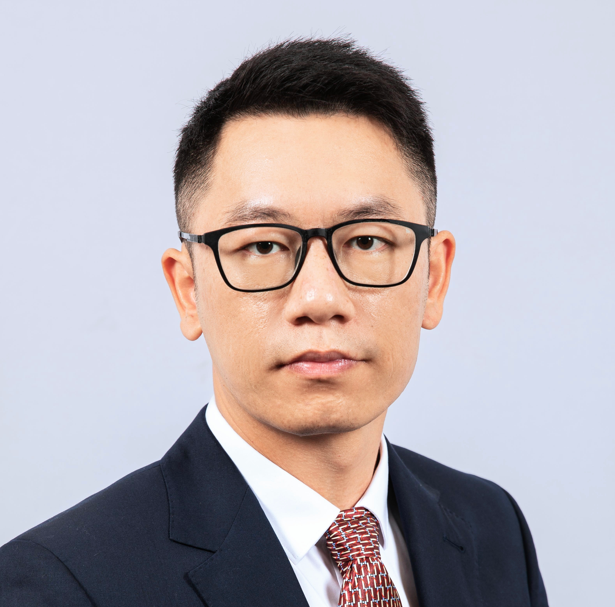
Greetings! I am Qilin (Chee-Lyn), a Senior Lecturer and ARC DECRA Fellow at Curtin University, Australia, within the Discipline of AI & Data Science at the School of Electrical Engineering, Computing and Mathematical Sciences (EECMS). My role spans teaching and research: I coordinate Curtin’s AI programs of study as AI Specialisation Coordinator (Bachelor) and AI Major Coordinator (Master of Computing), and my work sits at the intersection of artificial intelligence, machine learning, and computer vision with civil and structural engineering. My research develops data-driven models for intelligent infrastructure — spanning vision-based structural health monitoring, data-driven structural dynamics and blast simulation, digital twins, and, most recently, agentic AI and large language models for autonomous infrastructure monitoring — aiming to advance the state of the art and contribute to more efficient, effective, and sustainable engineering solutions.
News
- 2026 — Chairing the special session Emerging AI Methods for Structural Engineering at ICES2026 (2nd International Conference on Engineering Structures), Brisbane, 1–4 December 2026.
- 2026 — Awarded an ARC DECRA Fellowship (A$510,000) for Next-Generation Agentic AI System for Intelligent Infrastructure Monitoring.
- 2026 — Promoted to Senior Lecturer at Curtin University.
- 2025 — Appointed AI Specialisation Coordinator (Bachelor) and AI Major Coordinator (Master of Computing), leading AI curriculum design across the Faculty and Curtin’s international campuses.
- 2025 — Awarded the National Road Safety Action Grant (A$641,436) for AI-assisted design of sustainable road barriers.
- 2025 — Awarded a Curtin Trailblazer EMCR Grant for an AI-empowered multi-modality digital twin.
- 2025 — Appointed Guest Editor for the Buildings special issue on AI-powered structural health monitoring.
- 2024 — Awarded an ARC Linkage Grant (A$415,380) on damage detection with infrastructure digital twins.
- 2024 — Co-led the CSIRO Next-Generation AI Graduate Program (A$350,000) with WA Police.
My research
I began my research journey as an MPhil student, where I delved into the foundational aspects of machine learning, exploring its theories and methodologies. This early experience laid the groundwork for my PhD, during which I focused on deep learning, investigating its potential to solve complex problems and push the boundaries of what machines can achieve in learning from data.
Upon completing my PhD, I transitioned my research focus toward the application of AI and machine learning techniques in the field of structural engineering. This shift was driven by a desire to bridge the gap between cutting-edge technology and real-world engineering challenges. My work now centers on developing and applying AI-driven solutions to problems such as data-driven structural dynamics simulation and vision-based structural health monitoring. These works are mostly conducted in collaboration with a world-class structural dynamics lab, CIMP (Centre for Infrastructural Monitoring and Protection).
By integrating AI/ML methodologies with engineering principles, I aim to contribute to the advancement of more efficient, accurate, and robust systems for monitoring and analyzing the health of structures. My research not only seeks to improve existing techniques but also to pioneer new approaches that leverage the power of machine learning to enhance the safety, reliability, and sustainability of our built environment.
My background and history
I earned my PhD in 2020 and my MPhil in 2016, both from Curtin University, where I focused on advancing machine learning and deep learning techniques. My academic journey began with a BSc from Sun Yat-sen University in 2013, where I developed a strong foundation in computer science and engineering.
Immediately after completing my PhD, I joined the School of Electrical Engineering, Computing, and Mathematical Sciences at Curtin University as a faculty member. Since then, I have been actively involved in teaching and research, contributing to the development and application of AI and machine learning technologies, particularly in the context of structural engineering. My commitment to advancing these fields has been a constant throughout my academic and professional career at Curtin.