
Sitemap
A list of all the posts and pages found on the site. For you robots out there is an XML version available for digesting as well.
Pages
Posts
portfolio
publications
Affinity learning via a diffusion process for subspace clustering
Published in Pattern Recognition, 2018
Affinity learning through a diffusion process for subspace clustering.
Recommended citation: Li, Qilin, Wanquan Liu, and Ling Li. "Affinity learning via a diffusion process for subspace clustering." Pattern Recognition 84 (2018): 39-50.
Paper
Semisupervised learning on graphs with an alternating diffusion process
Published in IEEE Transactions on Neural Networks and Learning Systems, 2020
Semisupervised learning on graphs using an alternating diffusion process.
Recommended citation: Li, Qilin, Senjian An, Wanquan Liu, and Ling Li. "Semisupervised learning on graphs with an alternating diffusion process." IEEE Transactions on Neural Networks and Learning Systems 32, no. 7 (2021): 2862-2874.
Paper
Prediction of BLEVE blast loading using CFD and artificial neural network
Published in Process Safety and Environmental Protection, 2021
CFD and artificial neural networks for predicting BLEVE blast loading.
Recommended citation: Li, Jun, Qilin Li, Hong Hao, and Ling Li. "Prediction of BLEVE blast loading using CFD and artificial neural network." Process Safety and Environmental Protection 149 (2021): 711-723.
Paper
Multi-View Diffusion Process for Spectral Clustering and Image Retrieval
Published in IEEE Transactions on Image Processing, 2023
This paper is about image retrieval and clustering using a novel multi-view diffusion process.
Recommended citation: Li, Qilin, Senjian An, Ling Li, Wanquan Liu, and Yanda Shao. "Multi-View Diffusion Process for Spectral Clustering and Image Retrieval." IEEE Transactions on Image Processing 32 (2023): 4610-4620.
Paper | Code
Machine learning prediction of structural dynamic responses using graph neural networks
Published in Computers & Structures, 2023
This paper is about data-driven spatiotemporal simulation of structural dynamic responses.
Recommended citation: Li, Qilin, Zitong Wang, Ling Li, Hong Hao, Wensu Chen, and Yanda Shao. "Machine learning prediction of structural dynamic responses using graph neural networks." Computers & Structures 289 (2023): 107188.
Paper | Code
A comparative study on the most effective machine learning model for blast loading prediction: From GBDT to Transformer
Published in Engineering Structures, 2023
This paper is a comparative study of commonly used machine learning approach for blast loading prediction.
Recommended citation: Li, Qilin, Yang Wang, Yanda Shao, Ling Li, and Hong Hao. "A comparative study on the most effective machine learning model for blast loading prediction: From GBDT to Transformer." Engineering Structures 276 (2023): 115310.
Paper
Monocular vision based 3D vibration displacement measurement for civil engineering structures
Published in Engineering Structures, 2023
A monocular computer vision approach for measuring 3D vibration displacement of civil engineering structures with a single camera.
Recommended citation: Shao, Yanda, Ling Li, Jun Li, Qilin Li, Senjian An, and Hong Hao. "Monocular vision based 3D vibration displacement measurement for civil engineering structures." Engineering Structures 293 (2023): 116661.
Paper
A novel transformer-based semantic segmentation framework for structural condition assessment
Published in Structural Health Monitoring, 2024
This paper is about structural component and structural damage identification via vision-based semantic segmentation with SOTA Transformer networks.
Recommended citation: Wang, Ruhua, Yanda Shao, Qilin Li, Ling Li, Jun Li, and Hong Hao. "A novel transformer-based semantic segmentation framework for structural condition assessment." Structural Health Monitoring 23, no. 2 (2024): 1170-1183.
Paper
Machine learning prediction of BLEVE loading with graph neural networks
Published in Reliability Engineering & System Safety, 2024
This paper is about data-driven simulation of BLEVE blast wave propagation
Recommended citation: Li, Qilin, Yang Wang, Wensu Chen, Ling Li, and Hong Hao. "Machine learning prediction of BLEVE loading with graph neural networks." Reliability Engineering & System Safety 241 (2024): 109639.
Paper | Code
Advancing blast fragmentation simulation of RC slabs: A graph neural network approach
Published in Engineering Structures, 2024
This paper is about data-driven simulation of close-in blast fragmentation of concrete slabs using GNN
Recommended citation: Li, Qilin, Zitong Wang, Wensu Chen, Ling Li, and Hong Hao. "Advancing blast fragmentation simulation of RC slabs: A graph neural network approach." Engineering Structures 308 (2024): 118009.
Paper | Code
Structural damage detection and localization via an unsupervised anomaly detection method
Published in Reliability Engineering & System Safety, 2024
Unsupervised anomaly detection for structural damage detection and localization.
Recommended citation: Liu, Jie, Qilin Li, Ling Li, and Senjian An. "Structural damage detection and localization via an unsupervised anomaly detection method." Reliability Engineering & System Safety 252 (2024): 110465.
Paper
Out-of-plane full-field vibration displacement measurement with monocular computer vision
Published in Automation in Construction, 2024
Monocular computer vision for out-of-plane full-field vibration displacement measurement.
Recommended citation: Shao, Yanda, Ling Li, Jun Li, Qilin Li, Senjian An, and Hong Hao. "Out-of-plane full-field vibration displacement measurement with monocular computer vision." Automation in Construction 165 (2024): 105507.
Paper
A Novel Exploration of Diffusion Process Based on Multi-Type Galton–Watson Forests
Published in Mathematics, 2024
A novel diffusion process formulated on multi-type Galton–Watson forests.
Recommended citation: Zhu, Yanjiao, Qilin Li, Wanquan Liu, Chuancun Yin, and Zhenlong Gao. "A Novel Exploration of Diffusion Process Based on Multi-Type Galton–Watson Forests." Mathematics 12, no. 22 (2024): 3462.
Paper
Prediction and interpretability of accidental explosion loads from hydrogen-air mixtures using CFD and artificial neural network method
Published in International Journal of Hydrogen Energy, 2024
CFD and interpretable neural networks for predicting accidental hydrogen-air explosion loads.
Recommended citation: Hu, Qingchun, Xihong Zhang, Qilin Li, Hong Hao, Chris Coffey, and Fiona Mitchell-Corbett. "Prediction and interpretability of accidental explosion loads from hydrogen-air mixtures using CFD and artificial neural network method." International Journal of Hydrogen Energy 66 (2024): 135-147.
Paper
Prediction of BLEVE-induced response of road tunnel using Transformer network with modified self-attention (SAMT)
Published in Engineering Structures, 2024
A Transformer with modified self-attention (SAMT) for predicting BLEVE-induced road tunnel response.
Recommended citation: Cheng, Ruishan, Wensu Chen, Hong Hao, and Qilin Li. "Prediction of BLEVE-induced response of road tunnel using Transformer network with modified self-attention (SAMT)." Engineering Structures 314 (2024): 118415.
Paper
3DGEN: a framework for generating custom-made synthetic 3D datasets for civil structure health monitoring
Published in Structural Health Monitoring, 2024
A framework (3DGEN) for generating custom synthetic 3D datasets for civil SHM.
Recommended citation: Shao, Yanda, Ling Li, Jun Li, Qilin Li, Senjian An, and Hong Hao. "3DGEN: a framework for generating custom-made synthetic 3D datasets for civil structure health monitoring." Structural Health Monitoring 24, no. 5 (2025): 2801-2817.
Paper
Structural damage identification by using physics-guided residual neural networks
Published in Engineering Structures, 2024
Physics-guided residual neural networks for structural damage identification.
Recommended citation: Wang, Ruhua, Jun Li, Ling Li, Senjian An, Bradley Ezard, Qilin Li, and Hong Hao. "Structural damage identification by using physics-guided residual neural networks." Engineering Structures 318 (2024): 118703.
Paper
3D displacement measurement using a single-camera and mesh deformation neural network
Published in Engineering Structures, 2024
A single-camera, mesh deformation neural network for 3D displacement measurement.
Recommended citation: Shao, Yanda, Ling Li, Jun Li, Qilin Li, Senjian An, and Hong Hao. "3D displacement measurement using a single-camera and mesh deformation neural network." Engineering Structures 318 (2024): 118767.
Paper
Fragment prediction of reinforced concrete wall under close-in explosion using Fragment Graph Network (FGN)
Published in Computers & Structures, 2024
Fragment Graph Network (FGN) for fragment prediction of RC walls under close-in explosion.
Recommended citation: Wang, Zitong, Qilin Li, Wensu Chen, Hong Hao, and Ling Li. "Fragment prediction of reinforced concrete wall under close-in explosion using Fragment Graph Network (FGN)." Computers & Structures 305 (2024): 107556.
Paper
3D surface segmentation from point clouds via quadric fits based on DBSCAN clustering
Published in Pattern Recognition, 2024
Quadric-fit, DBSCAN-based clustering for 3D surface segmentation from point clouds.
Recommended citation: Xie, Tingting, Hui Chen, Wanquan Liu, Rongyu Zhou, and Qilin Li. "3D surface segmentation from point clouds via quadric fits based on DBSCAN clustering." Pattern Recognition 154 (2024): 110589.
Paper
EdgeConvFormer: An Unsupervised Anomaly Detection Method for Multivariate Time Series
Published in International Conference on Pattern Recognition (ICPR), 2024
An unsupervised anomaly detection method (EdgeConvFormer) for multivariate time series.
Recommended citation: Liu, Jie, Qilin Li, Senjian An, Bradley Ezard, and Ling Li. "EdgeConvFormer: An Unsupervised Anomaly Detection Method for Multivariate Time Series." In International Conference on Pattern Recognition, pp. 367-382. Springer, 2024.
Paper
A multi-task machine learning approach for data efficient prediction of blast loading
Published in Engineering Structures, 2025
A multi-task learning approach that improves data efficiency in predicting blast loading.
Recommended citation: Li, Qilin, Ling Li, Yanda Shao, Ruhua Wang, and Hong Hao. "A multi-task machine learning approach for data efficient prediction of blast loading." Engineering Structures 326 (2025): 119577.
Paper
Advancements in 3D displacement measurement for civil structures: A monocular vision approach with moving cameras
Published in Measurement, 2025
Monocular, moving-camera computer vision for 3D displacement measurement of civil structures.
Recommended citation: Li, Qilin, Yanda Shao, Ling Li, Jun Li, and Hong Hao. "Advancements in 3D displacement measurement for civil structures: A monocular vision approach with moving cameras." Measurement 242 (2025): 116060.
Paper
Robust 3D vessel trajectory monitoring with monocular vision based deep learning and surveillance cameras
Published in Ocean Engineering, 2025
Deep learning with monocular surveillance cameras for robust 3D vessel trajectory monitoring.
Recommended citation: Shao, Yanda, Ling Li, Jun Li, Qilin Li, Senjian An, and Hong Hao. "Robust 3D vessel trajectory monitoring with monocular vision based deep learning and surveillance cameras." Ocean Engineering 332 (2025): 121429.
Paper
DIMMC: A 3D vision approach for structural displacement measurement using a moving camera
Published in Engineering Structures, 2025
A 3D vision approach (DIMMC) for structural displacement measurement using a moving camera.
Recommended citation: Shao, Yanda, Ling Li, Jun Li, Qilin Li, Senjian An, and Hong Hao. "DIMMC: A 3D vision approach for structural displacement measurement using a moving camera." Engineering Structures 338 (2025): 120566.
Paper
A probability-based risk assessment of secondary fragments ejected from the reinforced concrete wall under close-in explosions
Published in Structural Safety, 2025
Probability-based risk assessment of secondary fragments from RC walls under close-in explosions.
Recommended citation: Wang, Zitong, Qilin Li, Wensu Chen, Hong Hao, and Ling Li. "A probability-based risk assessment of secondary fragments ejected from the reinforced concrete wall under close-in explosions." Structural Safety 114 (2025): 102565.
Paper
Diffusion process with structural changes for subspace clustering
Published in Pattern Recognition, 2025
A diffusion process incorporating structural changes for improved subspace clustering.
Recommended citation: Zhu, Yanjiao, Qilin Li, Wanquan Liu, and Chuancun Yin. "Diffusion process with structural changes for subspace clustering." Pattern Recognition 158 (2025): 111066.
Paper
Dynamic graph-based approach for prediction of spatiotemporal response of RC structure to impact loads
Published in Computers & Structures, 2025
This paper presents a dynamic graph-based approach for predicting the spatiotemporal response of reinforced concrete structures subjected to impact loads.
Recommended citation: Li, Qilin, Zhijie Huang, Yanda Shao, Ling Li, Wensu Chen, and Hong Hao. "Dynamic graph-based approach for prediction of spatiotemporal response of RC structure to impact loads." Computers & Structures 316 (2025): 107861.
Paper
Advancing crack detection with generative AI for structural health monitoring
Published in Structural Health Monitoring, 2025
This paper integrates a text-to-image generative model with large language models to synthesize realistic crack images, improving deep-learning-based crack detection for structural health monitoring.
Recommended citation: Shao, Yanda, Ling Li, Jun Li, Xiaofang Yao, Qilin Li, and Hong Hao. "Advancing crack detection with generative AI for structural health monitoring." Structural Health Monitoring (2025).
Paper
Unsupervised structural damage detection and severity assessment via U-GraphFormer
Published in Structural Health Monitoring, 2025
This paper presents U-GraphFormer, an unsupervised approach for detecting structural damage and assessing its severity.
Recommended citation: Liu, Jie, Qilin Li, Ling Li, and Senjian An. "Unsupervised structural damage detection and severity assessment via U-GraphFormer." Structural Health Monitoring (2025).
Paper
Data-Driven BLEVE Overpressure Prediction Using Explainable Machine Learning
Published in Engineering Applications of Neural Networks (EANN 2025), 2025
This paper develops explainable machine learning models for data-driven prediction of blast overpressure from boiling liquid expanding vapour explosions (BLEVEs).
Recommended citation: Shi, Zifan, Qilin Li, Ling Li, Yanda Shao, and Hong Hao. "Data-Driven BLEVE Overpressure Prediction Using Explainable Machine Learning." In Engineering Applications of Neural Networks, pp. 68-80. Cham: Springer Nature Switzerland, 2025.
Paper
Discovering interpretable blast loading equations from black-box machine learning models
Published in Advanced Engineering Informatics, 2026
This paper extracts interpretable equations for blast loading prediction from black-box machine learning models.
Recommended citation: Shi, Zifan, Qilin Li, Yanda Shao, Ling Li, and Hong Hao. "Discovering interpretable blast loading equations from black-box machine learning models." Advanced Engineering Informatics 71 (2026): 104244.
Paper
talks
Advancing Blast Fragmentation Simulation of RC Slabs: A Graph Neural Network Approach
Published:
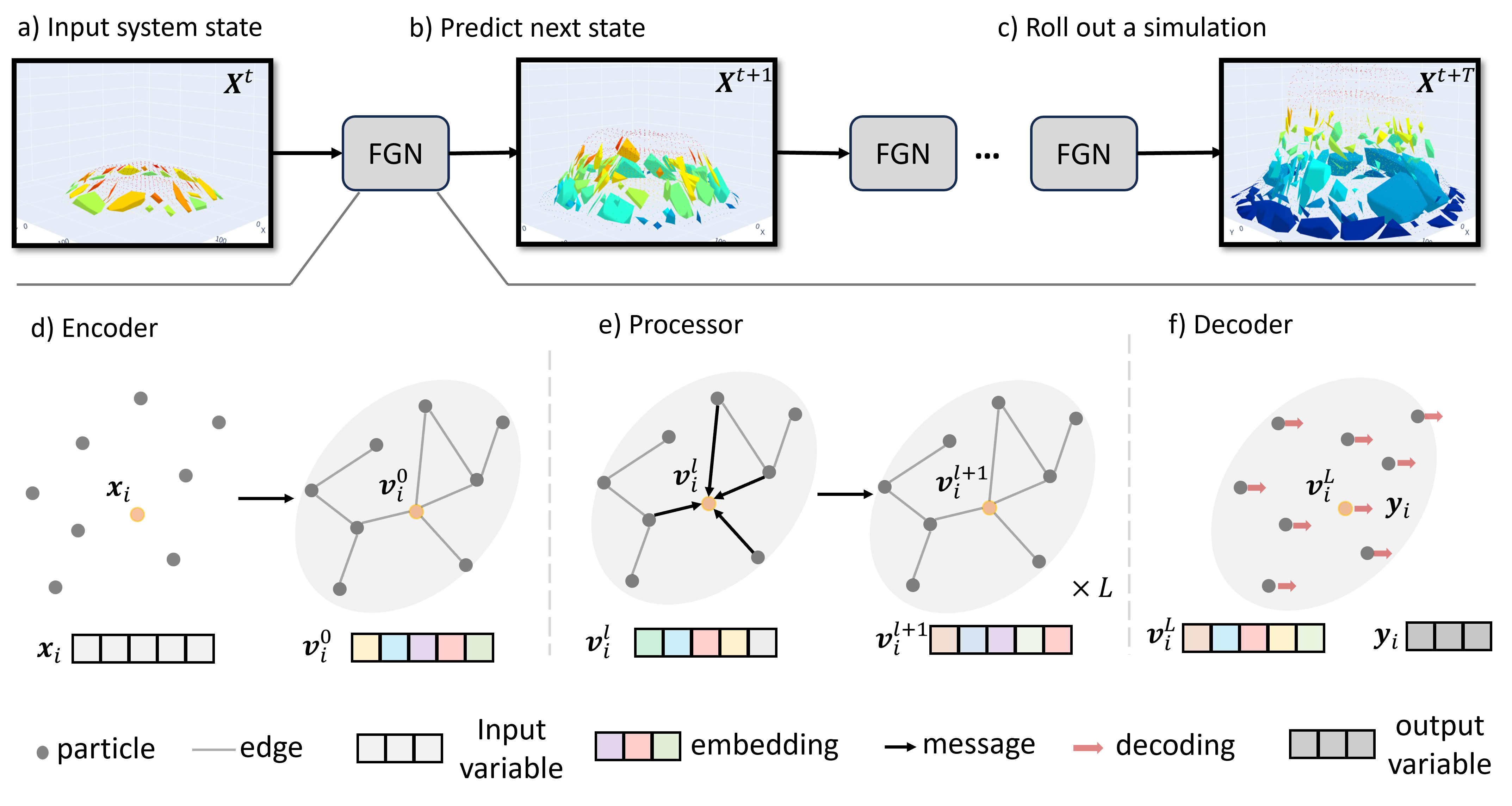
The flowchart of FGN
Multi-View Diffusion Process for Spectral Clustering and Image Retrieval
Published:
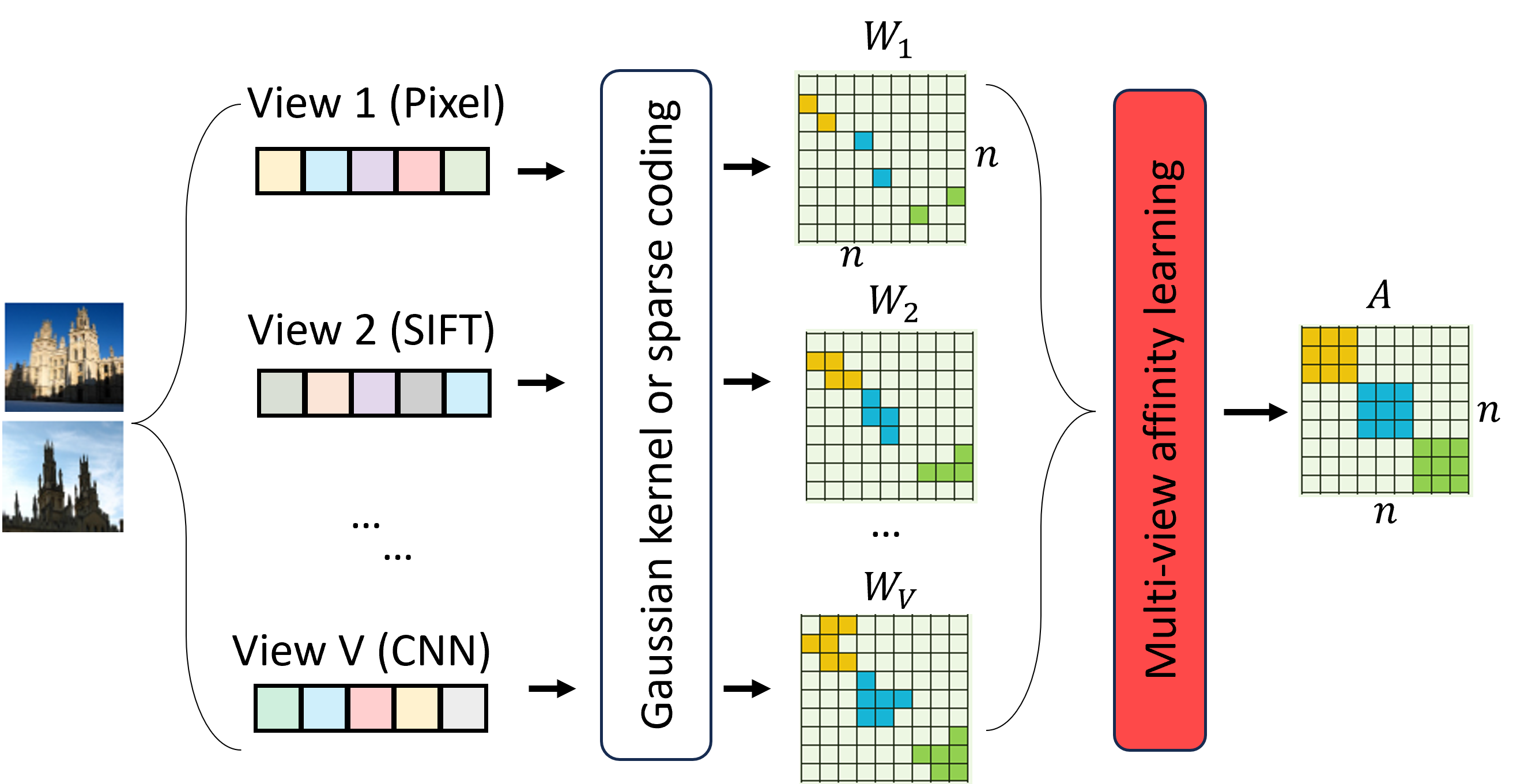
The flowchart of MVD
teaching
Fundamental Concepts of Cryptography
Undergraduate course, Curtin University, Department of Computing, 2020
An introduction to basic concept of cryptography with an emphasis on coding theory, classical cryptosystems and public key cryptography. Principles of information theoretic security. Computational hardness and number theory (Euclid’s algorithm, Euler and Fermat’s theorems). Public and private-key encryption, message authentication and digital signatures. ISEC2000 – Fundamental Concepts of Cryptography in the Curtin handbook.
Foundations of Computer Science
Undergraduate course, Curtin University, Department of Computing, 2020
This unit introduces the mathematical theory that underlies the computing profession. It introduces proof and logic concepts central to computer science and programming methodology, including an introduction to set theory and mathematical relations, graph theory. Computational and mathematical recursion is also addressed, along with the paired concept of induction proofs. Finally, the analysis of software using discrete statistics is also addressed, including univariate statistics and confidence intervals. COMP1006 – Foundations of Computer Science in the Curtin handbook.
Explainable Approaches to Machine Learning
Postgraduate course, Curtin University, Department of Computing, 2022
The unit will focus on special machine learning approaches, named explainable artificial intelligence or XAI, that generate solutions that can be trusted and are easy to understand and particularly well suited to fields such as medicine, finance, security, legal, military, and where human-machine interaction is needed. It will provide students with XAI fundamentals such as interpretability, explainability, and visualisation as well as legal and ethical issues surrounding XAI. The unit will also cover different classes of techniques from model-agnostic, example-based, to neural network interpretation. Finally, common XAI applications and current trends in XAI will also be discussed. COMP6013 – Explainable Approaches to Machine Learning in the Curtin handbook.
Machine Learning
Undergraduate course, Curtin University, Department of Computing, 2024
This unit introduces the foundational concepts, algorithms, and applications of Machine Learning (ML). Students will gain hands-on experience with diverse data types including tabular, image, text, and time series, and will learn to develop ML models such as linear models, SVM, decision trees, and neural networks. Covering a broad spectrum of topics within supervised and unsupervised learning, self-supervised learning, and deep learning, the unit also focuses on practical applications in computer vision and natural language processing, equipping students with the skills to implement ML solutions and solve real-world problems effectively. COMP3010 – Machine Learning in the Curtin handbook.
Search and Logic Approaches in Machine Learning
Postgraduate course, Curtin University, Discipline of AI & Data Science, 2026
This unit covers the different aspects of search and logic in machine learning and artificial intelligence. It familiarises learners with the modelling of intelligent agents and the related artificial intelligence problems and approaches. Methods for programming agent behaviour as well as the basics of planning are introduced, along with the role of logic in machine learning for certain types of agents. COMP6009 – Search and Logic Approaches in Machine Learning in the Curtin handbook.